

Cowls

A simple, easily memorized slip-stitch pattern combined with four coordinated colors makes for a stunning cowl that is surprisingly easy to knit. Both sides of the fabric are attractive, which gives you lots of styling options.

This cowl comes with an interesting twist: two lace patterns come together to form a tube wide enough to fit around your shoulders. The tube is twisted and held in place with temporary or pedestal buttons to offer a subtle reference to the Edwardian silhouette.

A single easily memorized stitch pattern combines with four brilliant colors to create an addictive knitting experience. The ever-changing interplay of colors keeps the knitting interesting.

This pattern is perfect for the advanced beginner who wants to move forward from flat scarves. Designed to take advantage of a gradient color set of mini skeins, the I’m Spiraling Cowl allows the yarn colors to shine.

Designed to take advantage of a gradient color set of mini skeins, the Gradiently Inclined Cowl lets the yarn do the heavy lifting.
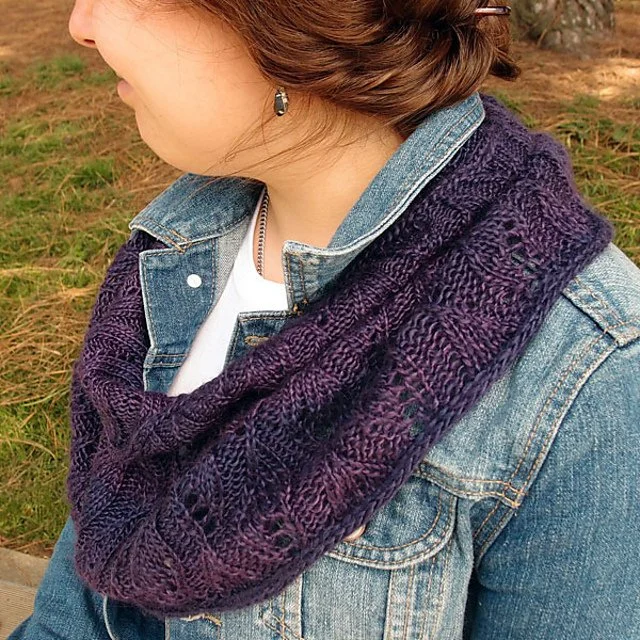
I wanted to design a cozy cowl that was attractive on both sides and had a bit of shaping for a better fit at the neckline. This lovely reversible stitch pattern features hidden leaves that make a secret promise of spring to the winter-weary wearer. You can wear it with either side facing out, depending on your mood.

I wanted to make something cozy and colorful to keep my aunt warm and to remind her of her tropical home in Colombia while she was visiting her sons in the Bay Area one winter.
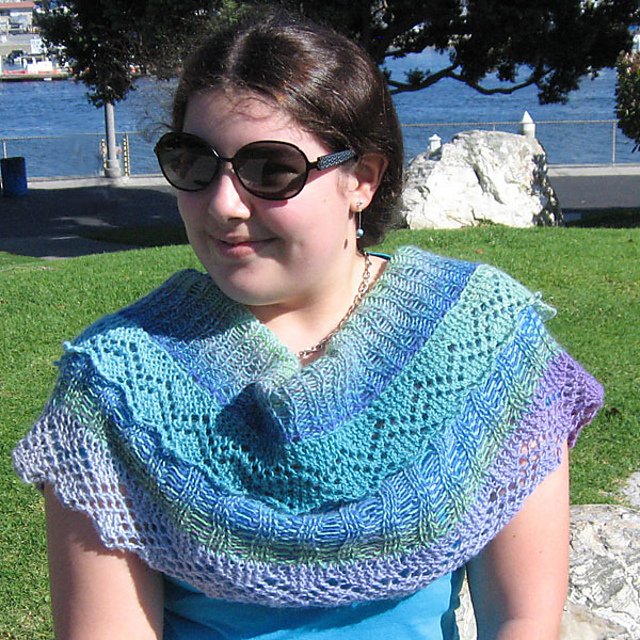
This versatile lace cowl requires 300-325 yds (274-297 m) each of two colors. It begins with a provisional cast on and is knit in one piece in the round, with the main body being worked in a simple dropped stitch pattern. The edgings are worked perpendicularly to the body. No bind off is needed because the live stitches are consumed as the edging is knit on.

This versatile lace cowl is knit in one piece in the round, with the main body being worked in a simple garter stitch lace, edged with an easy ribbed border. Since both stitches are reversible, there is no right or wrong side or top or bottom edge.